
1:35 Half Marathon in 16 Weeks
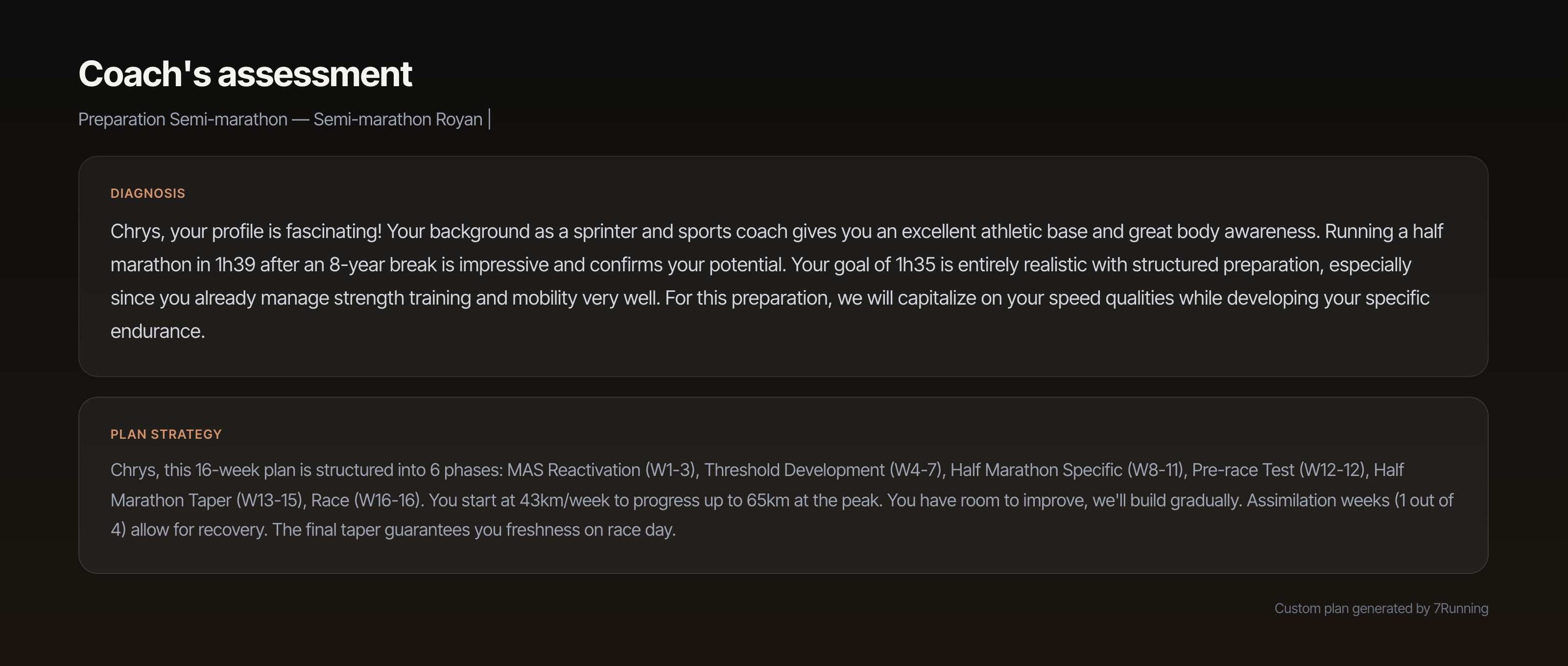
Returning to the half marathon after a long break and clocking 1:39, then targeting 1:35 over 21.1 km: that’s exactly Chrys’ trajectory. This 16-week half-marathon training plan, generated by the 7Running engine, is built on 763 cumulative kilometers, 4 sessions per week, and a controlled progression of volume and intensity. The goal is clear: turn an already solid base into sustainable performance, without skipping steps.
The plan at a glance (volume and dynamics)
Over 16 weeks, the plan starts at 43 km per week and progressively builds up to a peak of 65 km, before tapering down during the final phase. This dynamic follows a key rule: never exceed a +10% increase from one week to the next, while regularly integrating assimilation weeks.
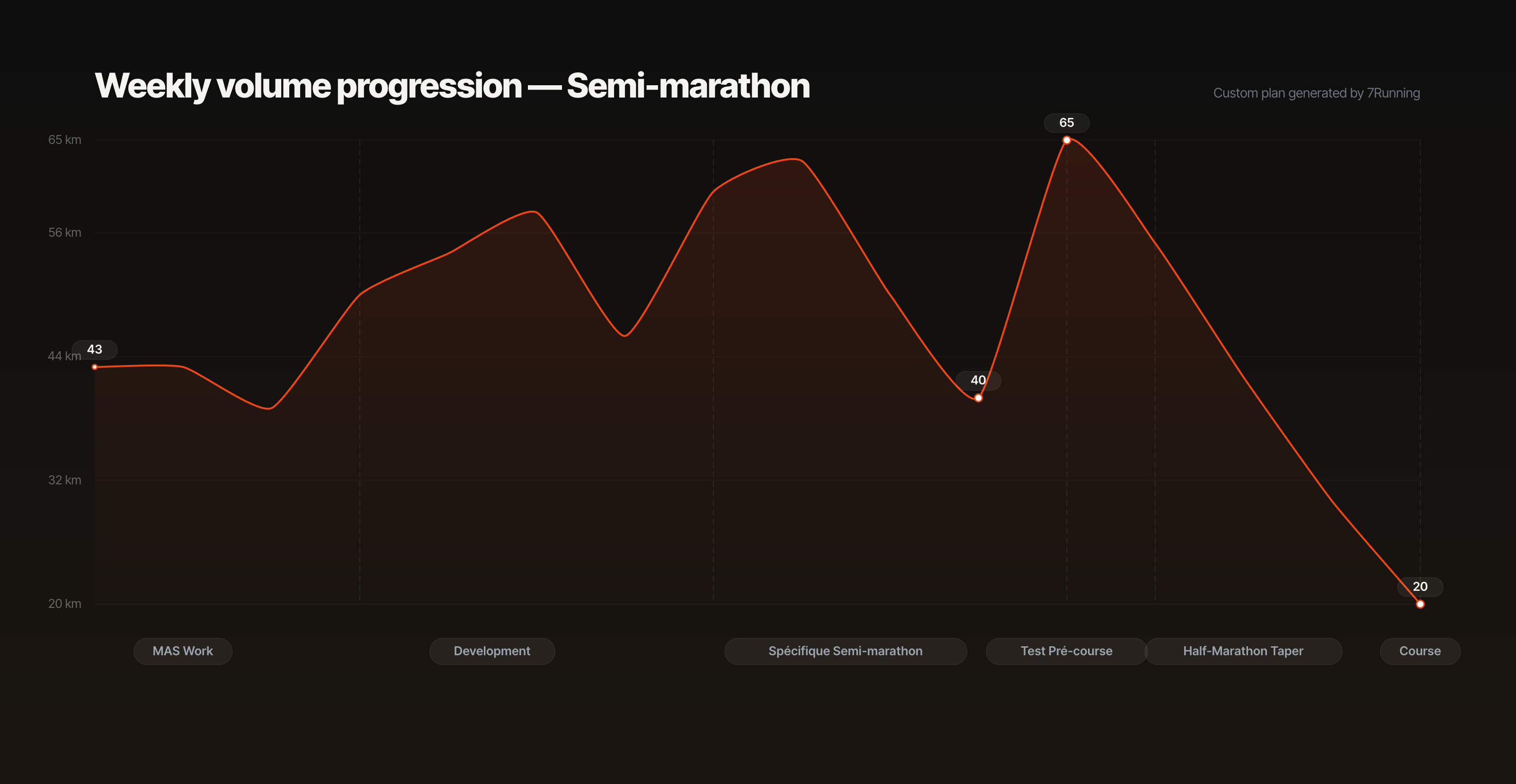
The roadmap is divided into 6 distinct phases, each with a precise physiological role: speed, threshold, specific work, test, taper, and race.
How 7Running calculates training paces (EF / RP)
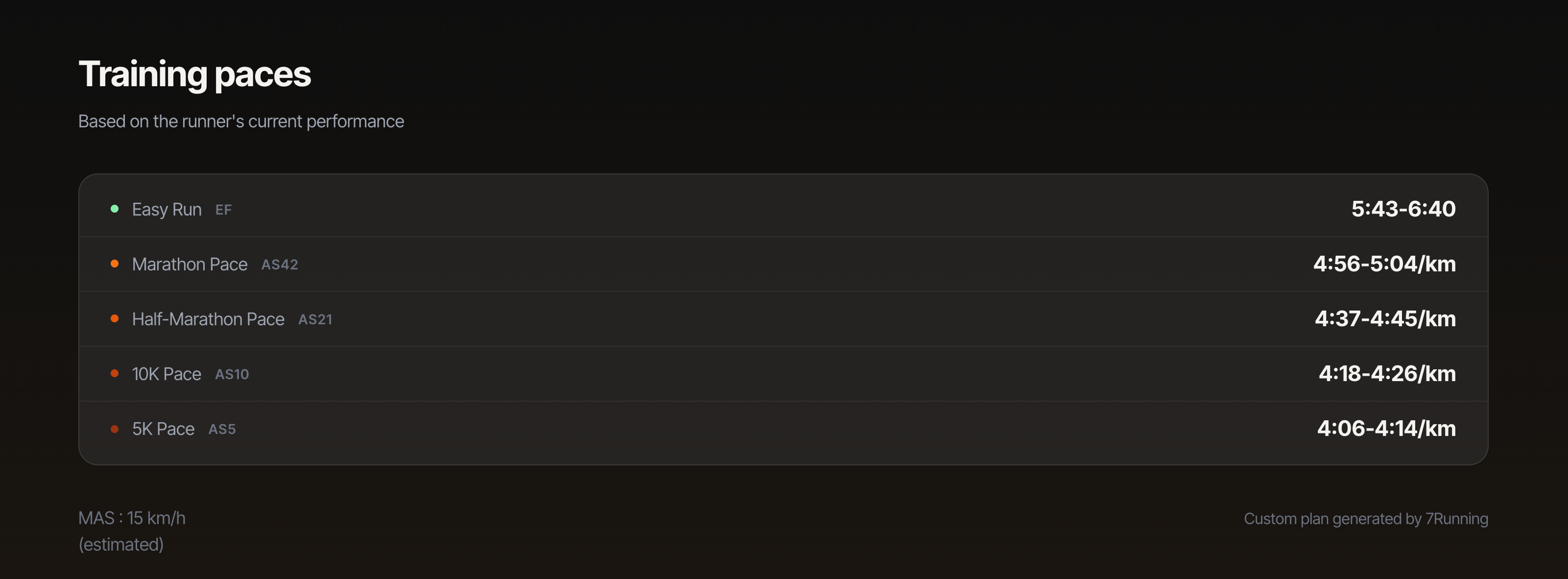
Chrys’ starting point is a recent half-marathon personal best of 1:39. The plan never confuses current ability with the target goal: paces are not based on race-day dreams, but calculated from real data (personal records, estimated VO₂max):
EF – Easy Run: 5:43 to 6:40/km, the foundation of aerobic development.
RP42: marathon pace, used as active endurance.
RP21: half-marathon race pace (4:37–4:45/km), the core of the 1:35 goal.
RP10 / RP5: faster paces to develop threshold and VO₂max.
Estimated VO₂max: 15 km/h, used as a reference without automatic modification (the athlete remains in control).
Each zone has a precise role: easy running builds the base, race-specific paces refine it, and VO₂max work develops power. Nothing is left to chance.
The phases: why this order works
The plan is structured into 6 progressive phases:
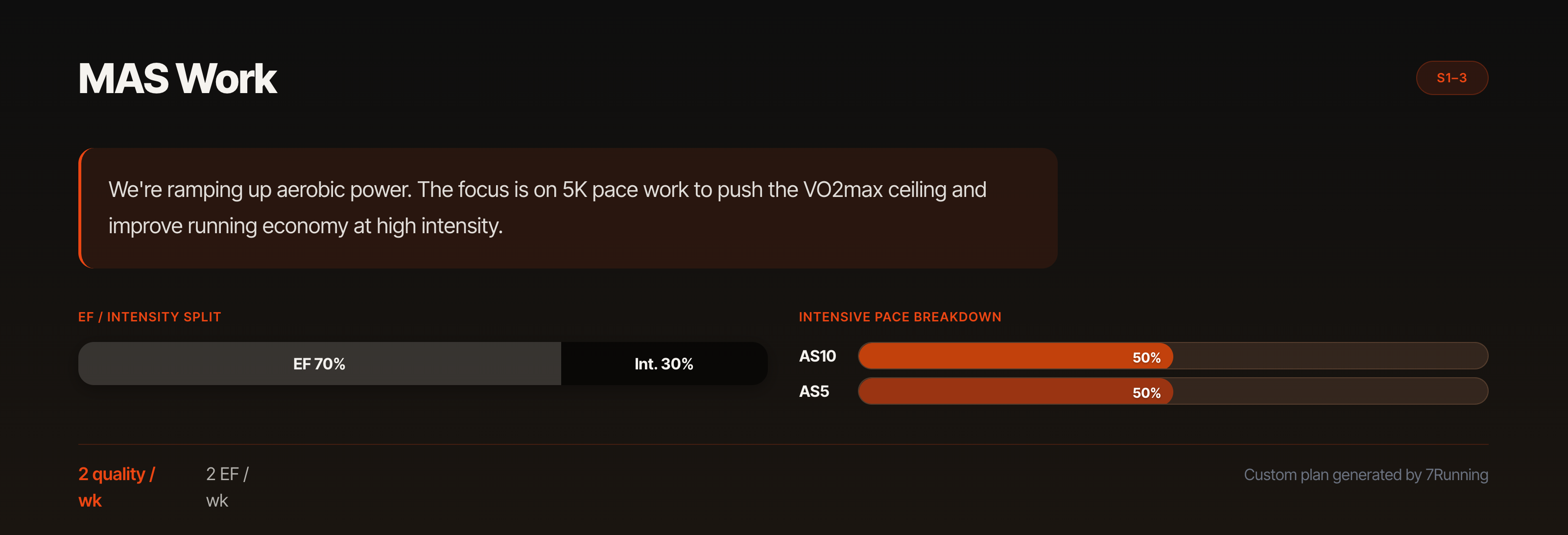
- VO₂max Reactivation (weeks 1 to 3): Speed is reawakened with RP5 and RP10, while maintaining 70% easy running.
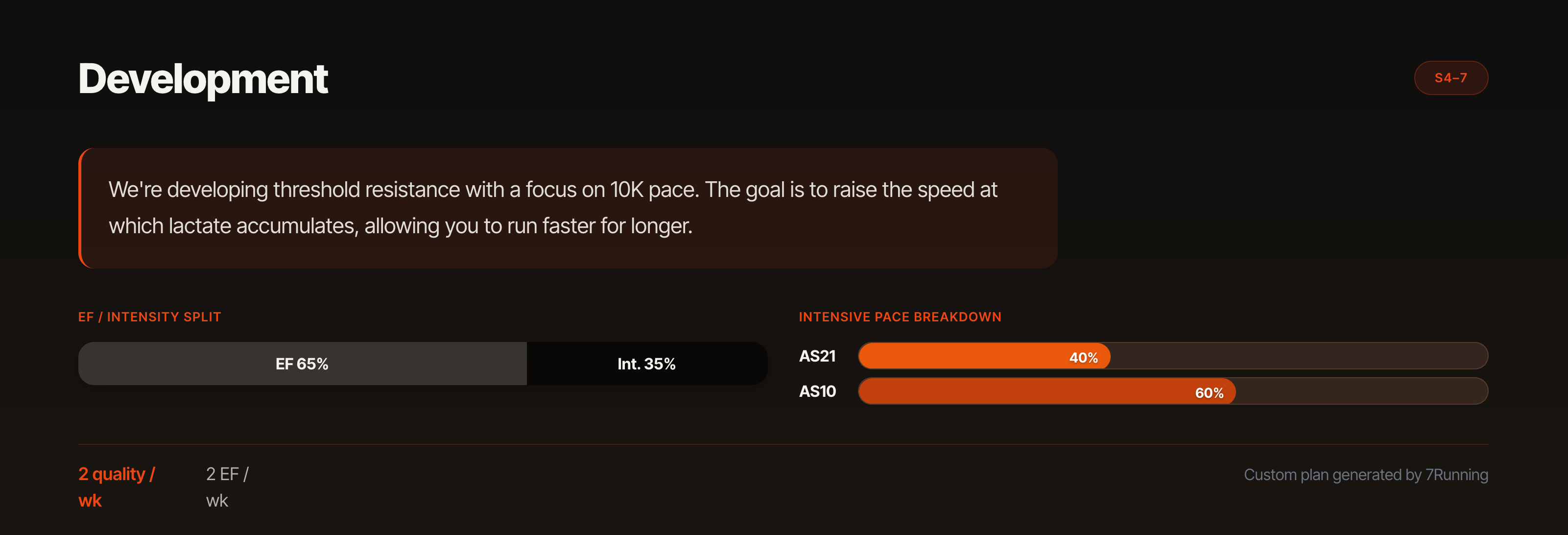
- Threshold Development (weeks 4 to 7): Threshold becomes central, with a RP10 / RP21 mix to improve the ability to sustain effort.
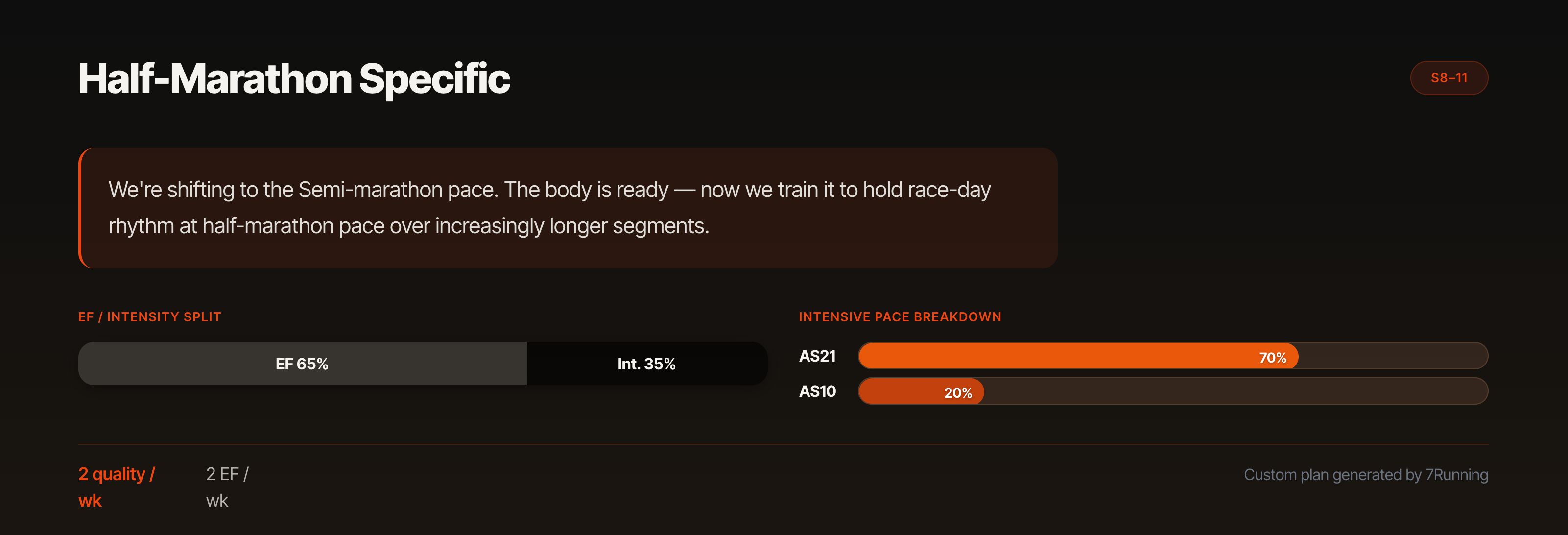
- Half-Marathon Specific (weeks 8 to 11): RP21 dominates — learning to run long at target pace.
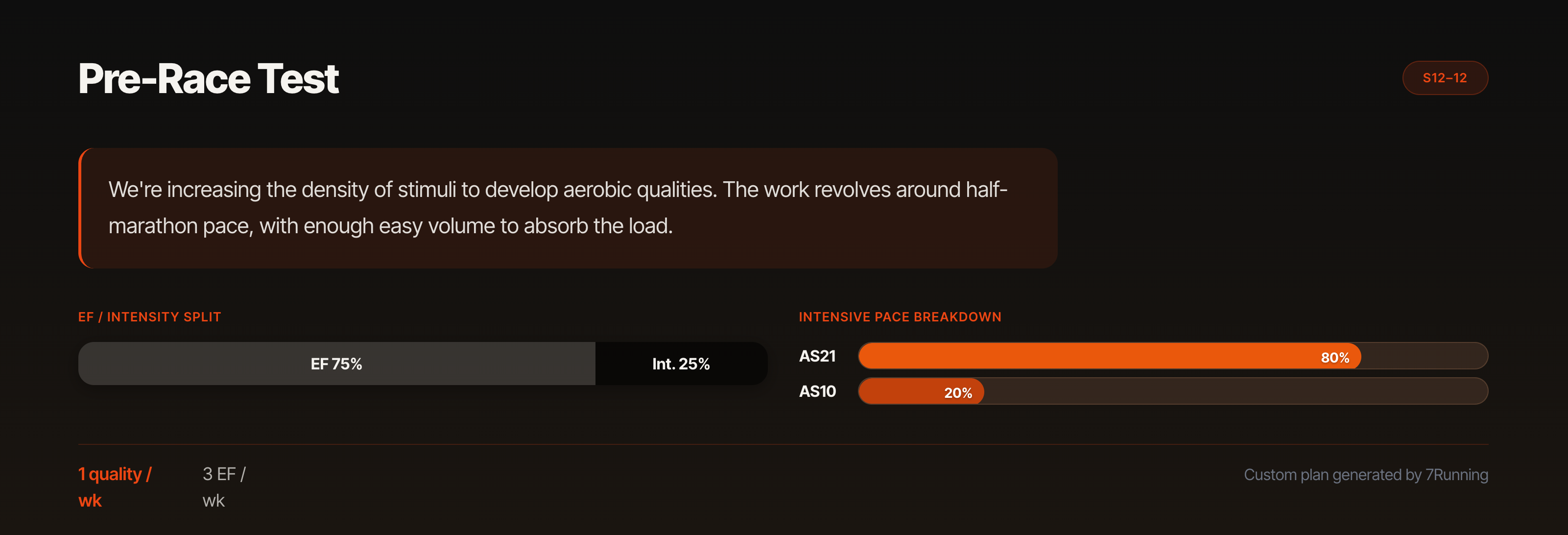
- Pre-Race Test (week 12): A key week to validate sensations without overload.
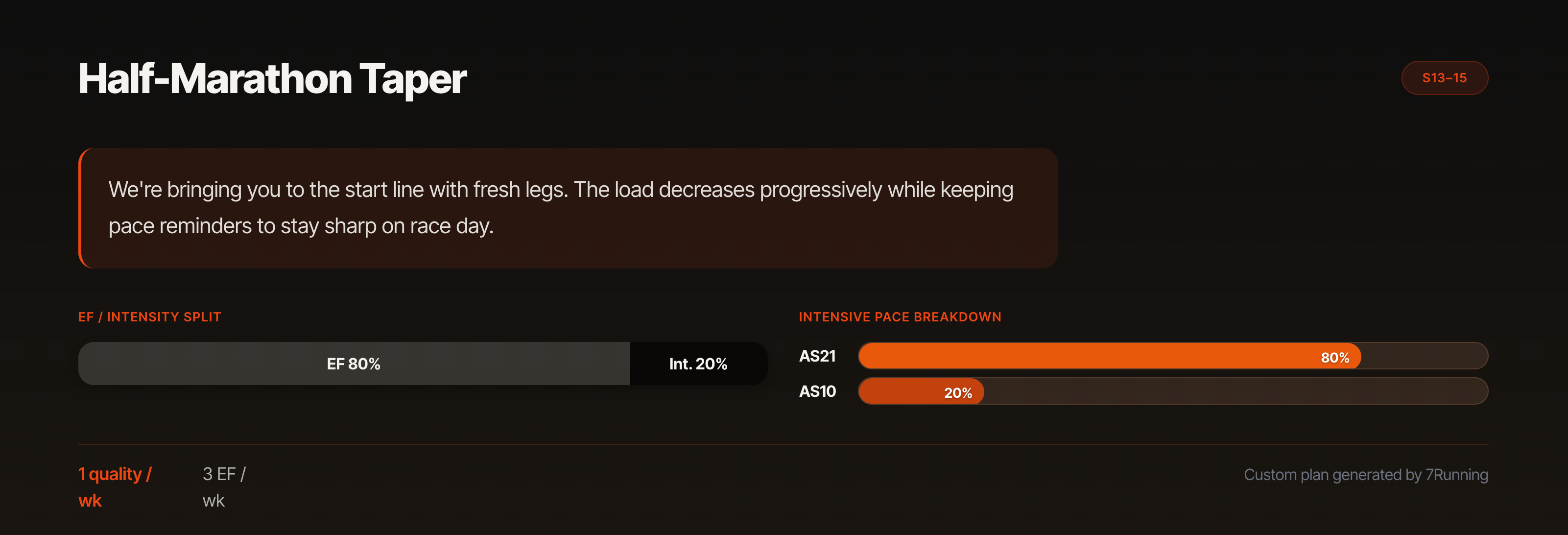
- Half-Marathon Taper (weeks 13 to 15): Volume decreases, intensity is maintained — freshness and confidence.
- Race (week 16): Everything converges toward half-marathon pace, without dispersion.
Key weeks (assimilation, peak, test session, race)
Certain weeks structure the entire preparation:
Assimilation weeks (3 and 7): deliberate volume reduction to allow supercompensation.
Peak week (12): maximum load with 65 km and intense specific work.
Taper weeks (14 and 15): progressive drop in mileage while maintaining paces.
Race week (16): minimal volume, mental and physiological focus.
These breathing spaces are essential to avoid chronic fatigue and arrive fresh on race day.
Conclusion
Over 16 weeks, Chrys follows a clear trajectory: progressive volume, controlled paces, well-defined phases, and intelligent tapering. This plan is not a miracle recipe — it is a structured method, reproducible for any runner targeting an ambitious half marathon without skipping steps.